I’ve been buying motorhomes and campervans for a long time now, and the reasons people sell haven’t changed much in that time. The van isn’t getting used. Plans have changed. Some people are moving up to something bigger, and some are giving up vans altogether. We talk to customers every day for whom selling is a big emotional decision. It often marks the end of one chapter of their lives or the start of another, and like a family home, the van carries a lot of memories.
Whatever your reason for selling, you’re likely to have the same questions: which way of selling suits you, what it will cost, and how long it takes for the money to reach your account. This guide covers the four main ways to sell, what makes selling a campervan different from selling a larger motorhome, and the paperwork you need to get right.

Key points
- Selling privately usually gets the highest price, but it takes the most time and effort, and your running costs carry on while you wait.
- Part-exchange is the simplest route if you’re buying another van from the same dealer.
- If you sell to us, you get one valuation, collection from your home and payment by bank transfer the same day.
- Auctions can suit rare and classic campervans. Everyday vans are harder to predict.
- Spring tends to bring out more private buyers than winter.
What makes a campervan different to sell
Campervans have a wider pool of buyers than most motorhomes. Most panel van conversions weigh under 3,500kg, so anyone with a standard car licence can drive one. Plenty of buyers also want a campervan as an everyday vehicle, which works in your favour but changes what they look at.
The base vehicle gets judged as a van. Buyers look at mileage, engine and service history the way they would on any van, as well as the living space. Volkswagen Transporters tend to hold their value well. Conversions on the Fiat Ducato, Peugeot Boxer, Citroën Relay, Ford Transit, Renault Trafic and Mercedes Sprinter are all common, so buyers have plenty to compare yours against.
Who did the conversion matters. A van from an established converter is easier to sell than a self-build. If yours is a self-build, buyers will ask whether the gas and electrics have been certified, and whether the V5C lists the body type as a motor caravan or still as a panel van. That affects how it can be insured, so have the answer ready.
Pop-tops get a close look. If your van has an elevating roof, expect buyers to raise it, check the canvas for mould or tears, and look at the seals.
Four ways to sell
1. Selling privately
This is usually where the highest price is. You set the price, write the advert, take the calls, arrange viewings and handle the paperwork yourself.
How long it takes depends on the price, the model and the time of year. A popular van priced sensibly in spring can go quickly. The same van listed in November may sit until February.
The costs are advertising, a proper clean, any small repairs, and possibly an MOT if one is due soon. The cost people tend to forget is everything that keeps going out while the van is waiting for a buyer. There’s more on that below.
Suits: sellers with time, a tidy van and the patience for viewings.
2. Part-exchange with a dealer
If you’re buying another campervan or motorhome, the dealer takes yours as part of the deal and handles the paperwork. You drive away in the new one.
The dealer has to prepare and resell your van, and their offer will reflect that. Compare the overall cost of the deal rather than looking at the part-exchange figure on its own.
Suits: anyone buying their next van and wanting a single transaction.
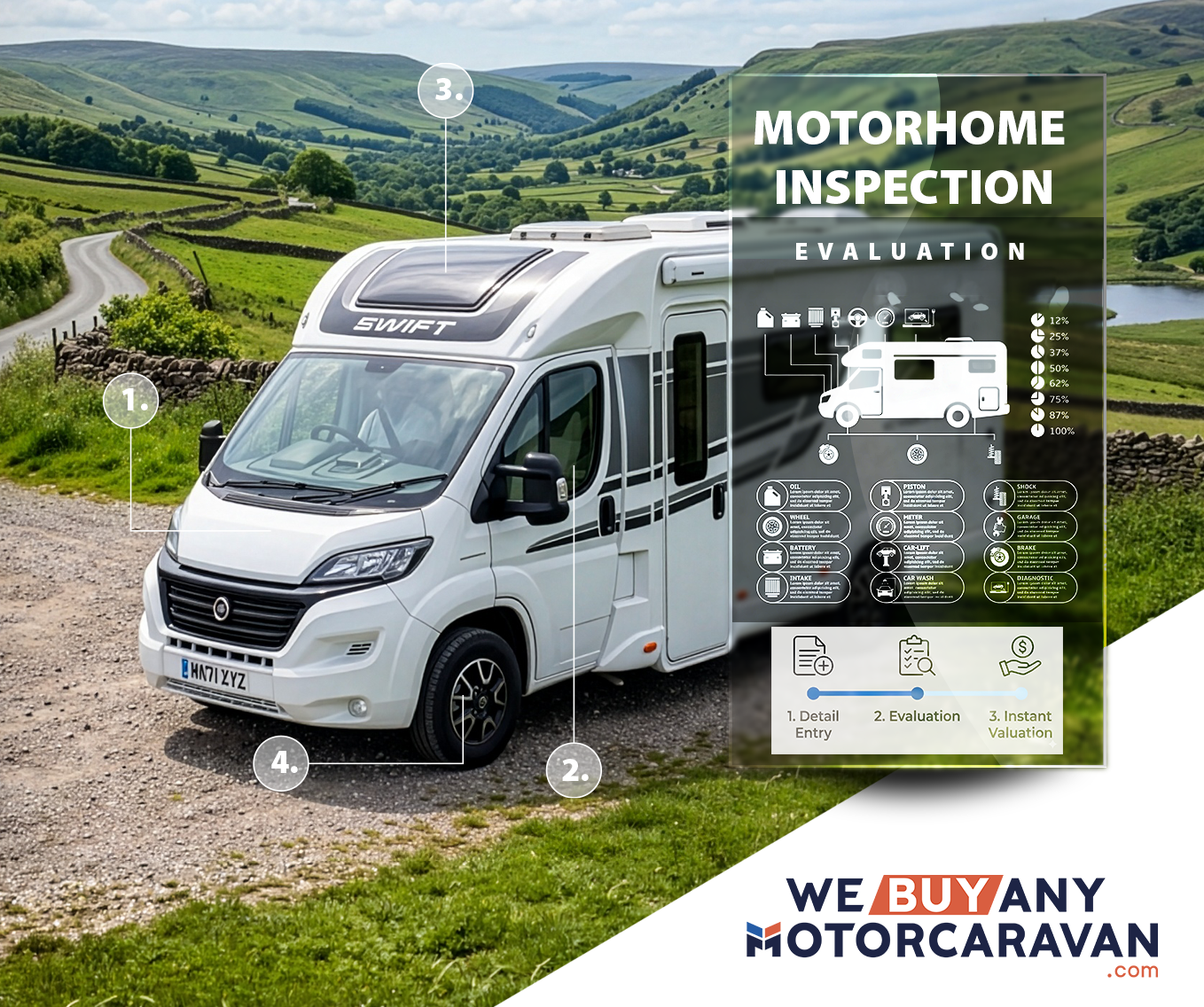
3. Selling to us
Give us a few details about your vehicle on our sell my campervan and we can quickly get back to you with an offer.
We currently buy around 100 motorhomes and campervans a month. The vans we buy go on to auction, so our valuations are based on what vans like yours are fetching now. You may have already heard me mention this on The UK Motorhome Market Show, but it’s worth repeating here that our job is to give you a real number, not a hopeful one, based on the data of what your specific campervan is selling for in the current market.
If you accept our offer, we can send out a driver and assessor straight to your driveay within 24 hours to collect. And the money id transferred into you account before we driveeawy.
If you have the time and patience to list privately, by all means, that may be your route to a higher price. What you’ll get from us, hoever, is your time, energy and reassurance that camperan is being moved on with minimal hassle for you.
Suits: sellers who would rather have certainty and speed than hold out for the top price.
4. Auction
You enter the van with an auction house and set a reserve, which is the lowest price you’ll accept. If bidding passes the reserve, it sells. If it doesn’t, you take it home and decide what to do next.
Seller’s fees and commission vary between auction houses, and some sales are trade-only, so check who can enter and what it will cost before you commit. Auctions work best when several bidders want the same van, which is more likely with classics and rare models than with everyday conversions.
Suits: owners of classic or unusual campervans who are comfortable with an uncertain result.
What it costs to wait
Most sellers compare the private price with a trade offer and stop there. The more useful comparison includes what the van costs you each month it goes unsold:
- Insurance
- Storage, if you pay for it
- Road tax (you get a refund for any full months left when you sell, but you’re paying until then)
- An MOT or habitation service that falls due while it’s listed
- Keeping the leisure battery charged and the van aired through winter
We tallied this figure up recently, conservatively, it could be between 3 – 6k per year to keep it sitting on the drive, unsold and unused.
A smaller campervan will often cost less to keep than a big motorhome, but the sum works the same way. Add up your own costs, multiply by the number of months a private sale might realistically take, and set the total against the gap between a private price and a trade offer. Sometimes the private sale still wins comfortably. Sometimes the gap is smaller than it first looked.
There’s also the van itself. Campervans that sit unused for long periods can develop flat spots on the tyres, flat batteries and damp, and each of those makes the van harder to sell.
What affects your campervan’s value
- Base vehicle, age and mileage. A well-known base with sensible mileage for its age is the easiest sell.
- Conversion quality and paperwork. Professional conversions, and self-builds with certificates, give buyers confidence.
- Service history. Keep both the vehicle servicing and the habitation checks. Buyers ask about each separately.
- Damp. This is the one buyers worry about most. If there’s a known leak, either fix it or be upfront and price it accordingly.
- Kit. Solar, diesel heating, a pop-top, a reversing camera and an awning all help, as long as they work.
- Time of year. Private demand is usually stronger in spring than in late autumn and winter.
Mileage and spec can move the price more than people expect. A 2022 VW California Coast we bought we recently bought was tidy, with full service history and no damp, but it had done 90,000 miles, and the nearest comparable van online was a higher-spec Ocean with less than half that mileage. As I said at the time: “Mileage really does matter. Spec really does matter. And you can’t value a Coast like an Ocean.”

Getting it ready without wasting money
Clean it properly inside and out, including the cooker, the fridge and the upholstery. Fix the small things, such as blown bulbs, sticking catches and torn fly screens, because buyers assume small faults mean bigger ones elsewhere. Put all your paperwork in one folder. If you’re selling privately, take photos in daylight showing the layout, the bed made up and the roof raised if it’s a pop-top.
Don’t spend money on upgrades you won’t get back. New gadgets and cosmetic resprays rarely add their cost to the price.
Selling privately: staying safe
- Ask callers on the phone when they’re looking to buy and how they’re paying. It saves wasted weekends.
- Check the buyer is insured before a test drive. Your policy may not cover them.
- Don’t hand over keys or paperwork until the money has cleared in your account. A banking screenshot or a pending payment is not the same thing.
- Be honest about faults. A buyer who finds one after agreeing a price will usually walk away, or come back asking for money off.
The paperwork
- V5C (logbook). Tell DVLA you’ve sold the van as soon as the sale happens. Doing it online is the quickest way, and you give the buyer the green new keeper slip. The full process is on GOV.UK.
- Road tax. Tax doesn’t transfer to the new owner. Once DVLA knows you’ve sold the van, any refund due to you is issued automatically.
- MOT. The MOT stays with the vehicle.
- Outstanding finance. Until the finance is settled, the van belongs to the lender. Ask your lender for a settlement figure and clear the finance as part of the sale.
- Insurance. Cancel your policy once the sale is complete, and check your policy terms for any cancellation charges.
- Receipt. Write down the date, the price, both parties’ names and addresses, the registration and the VIN. Both of you sign it, and each keeps a copy.
- Self-builds. Include your gas and electrical certificates and any conversion paperwork.
If it isn’t selling
Look at what similar vans have actually sold for, not what they’re listed at. If your price sits well above the sold prices, the price is the problem. Refresh the advert with new photos and new wording. Consider the season, too: a van listed in November may simply need to wait for spring.
It also helps to know your floor. Get a free valuation from us, and you’ll know what the trade will pay today. That lets you decide whether to keep waiting or sell now.

Frequently asked questions
How long does it take to sell a campervan privately?
It depends on the price, the model and the time of year. Popular vans priced realistically in spring can sell quickly. Overpriced vans, or vans listed in winter, can take months.
Can I sell a campervan with outstanding finance?
Not until the finance is settled. The lender owns the van until then. Ask your lender for a settlement figure before you agree a sale.
Do you buy self-build campervans?
No, we don’t buy self-builds. They can still sell well privately or at auction. Buyers will want to see gas and electrical certificates and to know how the V5C describes the body type, so have both ready.
Can I sell a campervan without an MOT?
Yes, although private buyers will usually expect money off to cover the cost and the risk of what might fail.
How quickly do you collect, and how do you pay?
We aim to collect within 24 hours of you accepting our offer, and within two days at most. We pay by bank transfer the same day.
What’s the best time of year to sell?
Private demand is usually strongest from late winter through spring, when people are planning their summer trips.
What paperwork do I need?
The V5C logbook, your service and habitation history, any gas and electrical certificates, and a receipt for the sale.